« Our Saturday at Vivo City | Home | This past Saturday night »
Peranakan Adventure
By jeni | July 15, 2008
I went on a tour today and learned lots – I’m so excited to tell you all. Just a disclaimer first, everything here I learned from my tour guide, so I assume it’s true but if it’s not, you’ll probably never know. Here goes.
A long, long time ago, in a far away place – wait, actually not far at all from me, but far from most of you I guess, a new culture began to blossom as Chinese immigrants began to settle into Singapore, Penang and Malacca and marry Malays, thus adopting many Malay customs and cultures. These people are now known as the Peranakans – also called Straits Chinese. Of course my version is seriously dumbed-down, but you can learn a lot more here.
Peranakans now make up a very small part of Singapore’s culture, and you can also find them in neighboring Malaysia and even all the way to Vietnam and Australia. In Singapore most Peranakans live on the Eastern part of the island, considered by many to be a desirable area to live. The land in the east has been reclaimed three times now (another story, very interesting), so many of the original Peranakan mansions and estates used to be along the ocean side, but they’re now further inland now.
Peranakans have adopted much of the Malay culture, but they have also retained much of their original Chinese culture – and displays of wealth are all around. These houses are painted with bright colors to encourage wealth and prosperity and also to display it – white paint was made from limestone and it was the cheapest, while colorful paint was more expensive. Ornate tiles and lanterns displayed wealth all around the family.
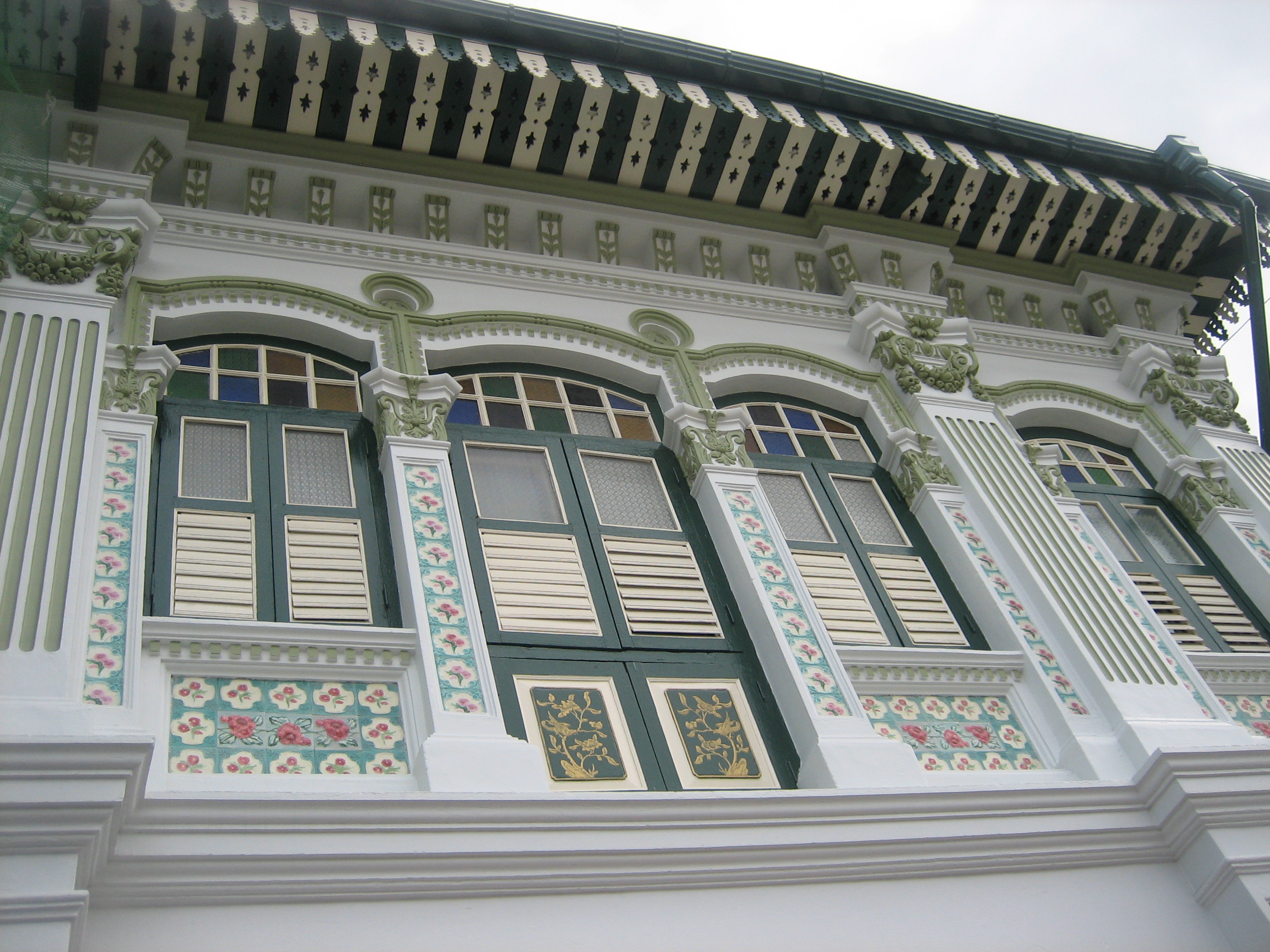
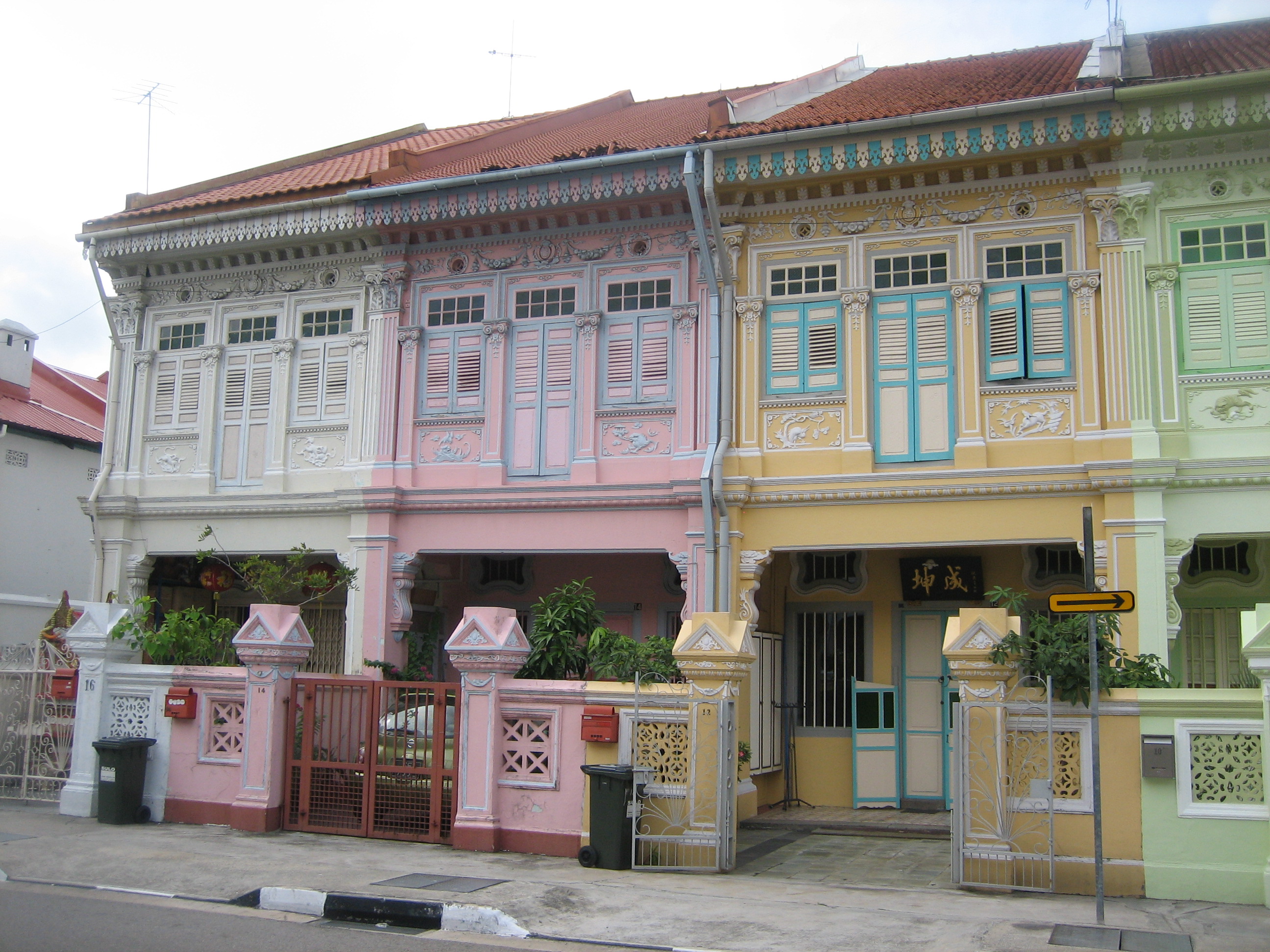
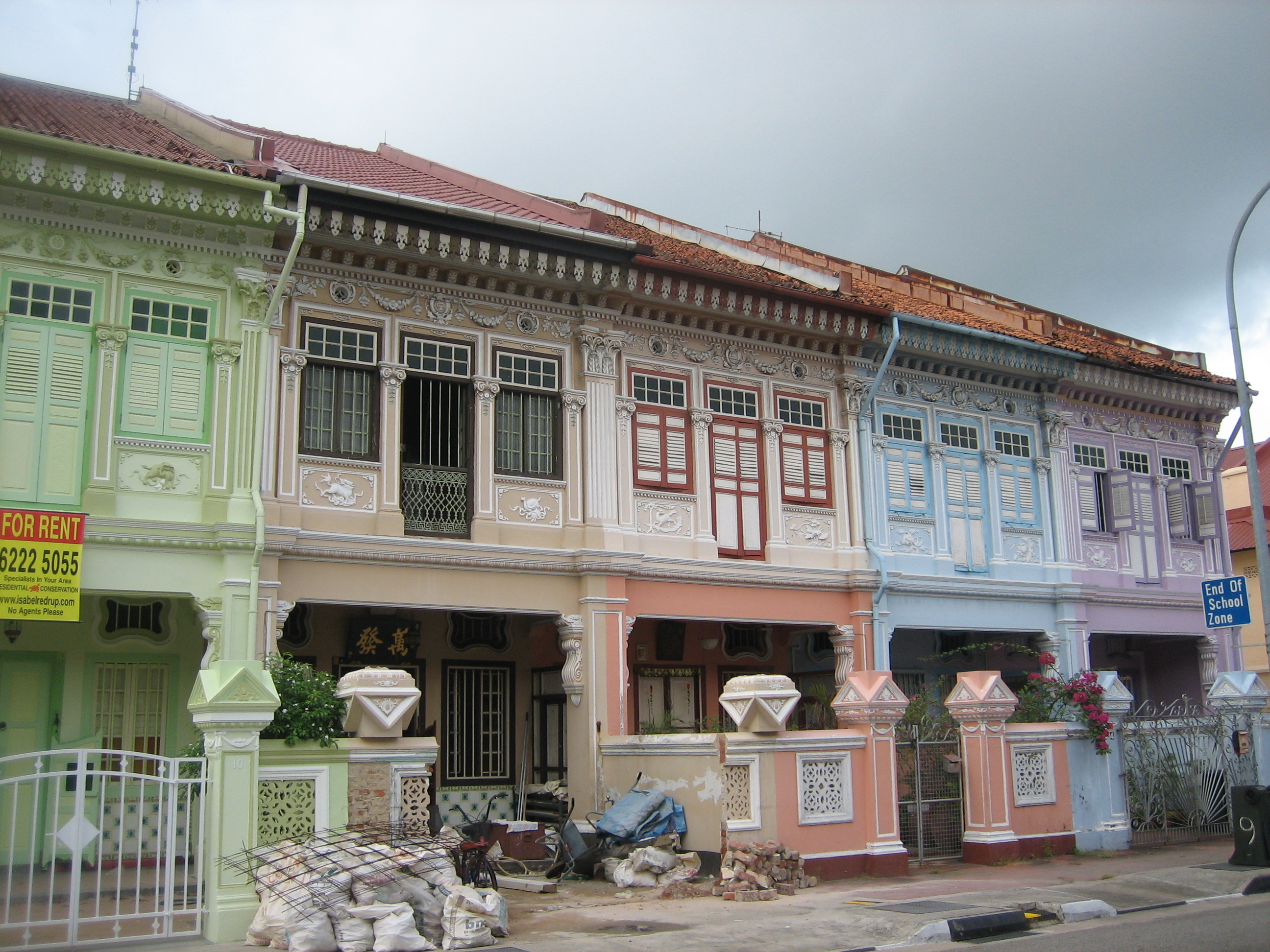
As you can see, the brown house above is being renovated, most likely because the children of the elders who live there demand it. Peranakans are also known for being very particular about their wealth, passing it on from generation to generation is very important. That said, in the days before investment bankers and mutual funds, wealth was wealth and would tend to run out after three or so generations, so the Peranakans came up with strange ways to maintain their wealth, including implementing rules in their wills about the selling of houses or family heirlooms
For instance: a Peranakan might leave his estate to his children, but say stipulate that the house may not be sold until after 50 years after his last grandson has died. If it is written in the will it is law, and even today you can see a house in disrepair because a family cannot afford to maintain it, yet they are not allowed to sell it either.
One key feature of Peranakan cuisine is dumplings, so off we went to visit a dumpling shop. Every year there is a dumpling festival in Singapore, and the shops (and old Peranakan nonyas) make dumpling after dumpling after dumpling. The dumplings are made of sticky rice, minced meat or soya beans, and tons of herbs and spices. The picture below shows a Peranakan girl making dumplings. She starts by wrapping a banana leaf into a pyrimad shape, adds some rice, then the filling (this one is pork) and finally more rice on top. The brown bags in front of her are displaying the different spices used in the filling: black pepper, white pepper, chilis, cardamom, cinnamon, and a bunch of others that I forget. After the dumpling is made, the banana leaf is tied closed with a ribbon (this isn’t traditional, it used to be a bamboo I think) and then cooked. All those little green things there hanging off of the pink strings are dumplings.
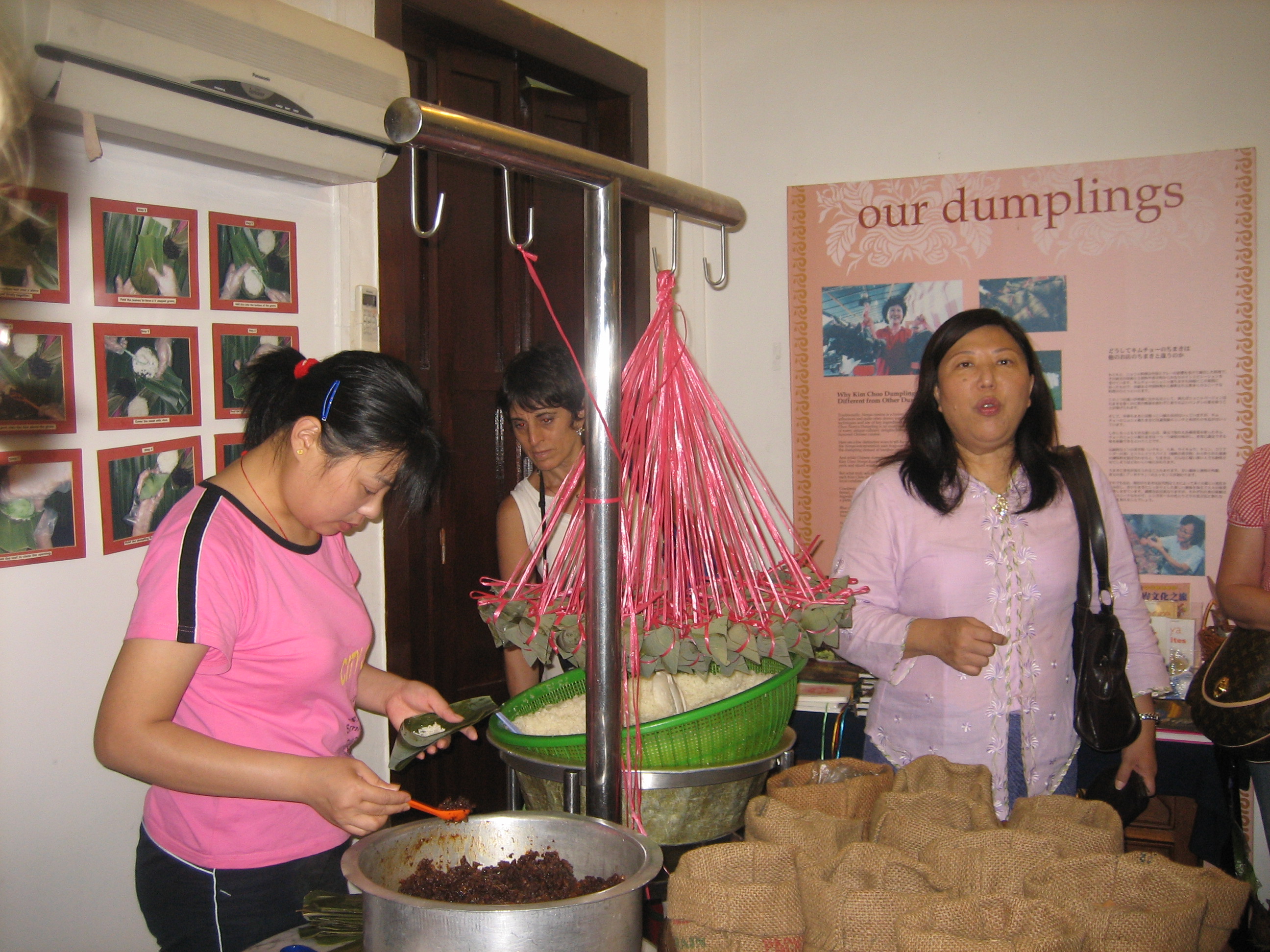
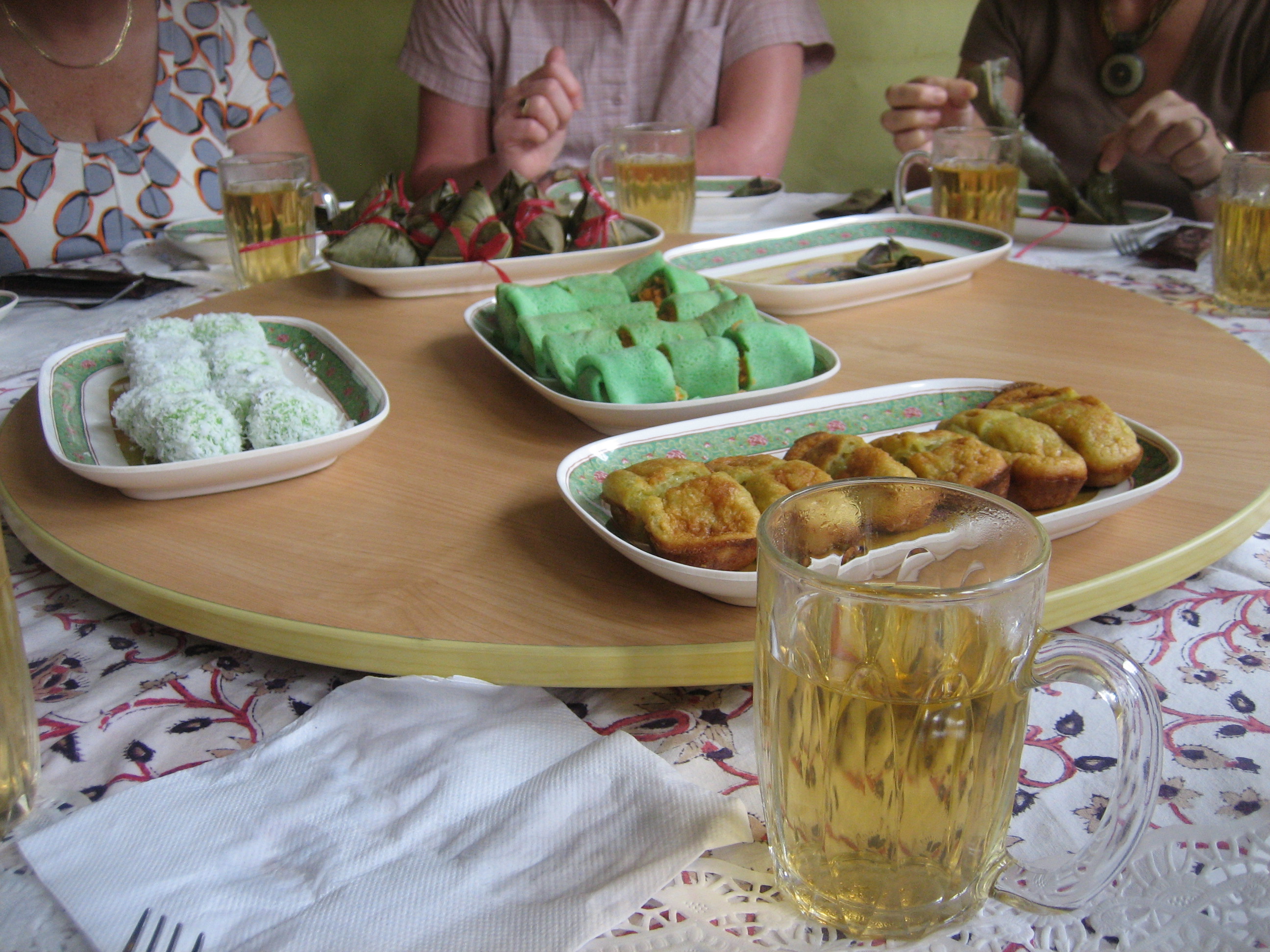
After watching the dumplings be made we all got to try them, along with some traditional sweet cakes, and I must say, they were fantastic. I tried the vegetarian offering, it was so good. You can tell the filling has been cooked and simmered all day with all of those herbs and spices and the rice is sticky but it works. And it’s so filling. I can see why they make an entire festival out of celebrating these little guys.
Here’s a shot of the dumplings (in the back there) and the other treats we got to try during tea. On the far left, a coconut pastry made of rice with some kind of liquid sugar concoction on the inside and rolled shaved coconut on the outside (probably shredded fresh that day). The green thing is also some sort of rice wrap on the outside, with what looks like shredded carrots but tastes sweet and delicious on the inside. Might be more coconut. In the front was some sort of eggy pastry – I didn’t like this one much – maybe because it didn’t have any coconut? Who knows. And of course we all got our mugs of tea. I know it looks like beer, but I guess they decided we should save that until after lunch.
After tea we headed over to a shop where they make traditional Peranakan dress – sarongs and long tunics and beaded shoes for the women. In order to display their wealth, the tunics didn’t traditionally have buttons. That way, the Peranakan women could make their husbands buy them fancy brooches to hold the tunics shut. Each tunic should have a brooch to close it at the breast, the waist, and then down toward the legs. The shop also made beaded shoes by hand. One pair of shoes takes one month of working 8 hours a day to bead. This is becoming a lost art because of the time commitment involved, but it’s still alive in Singapore today.
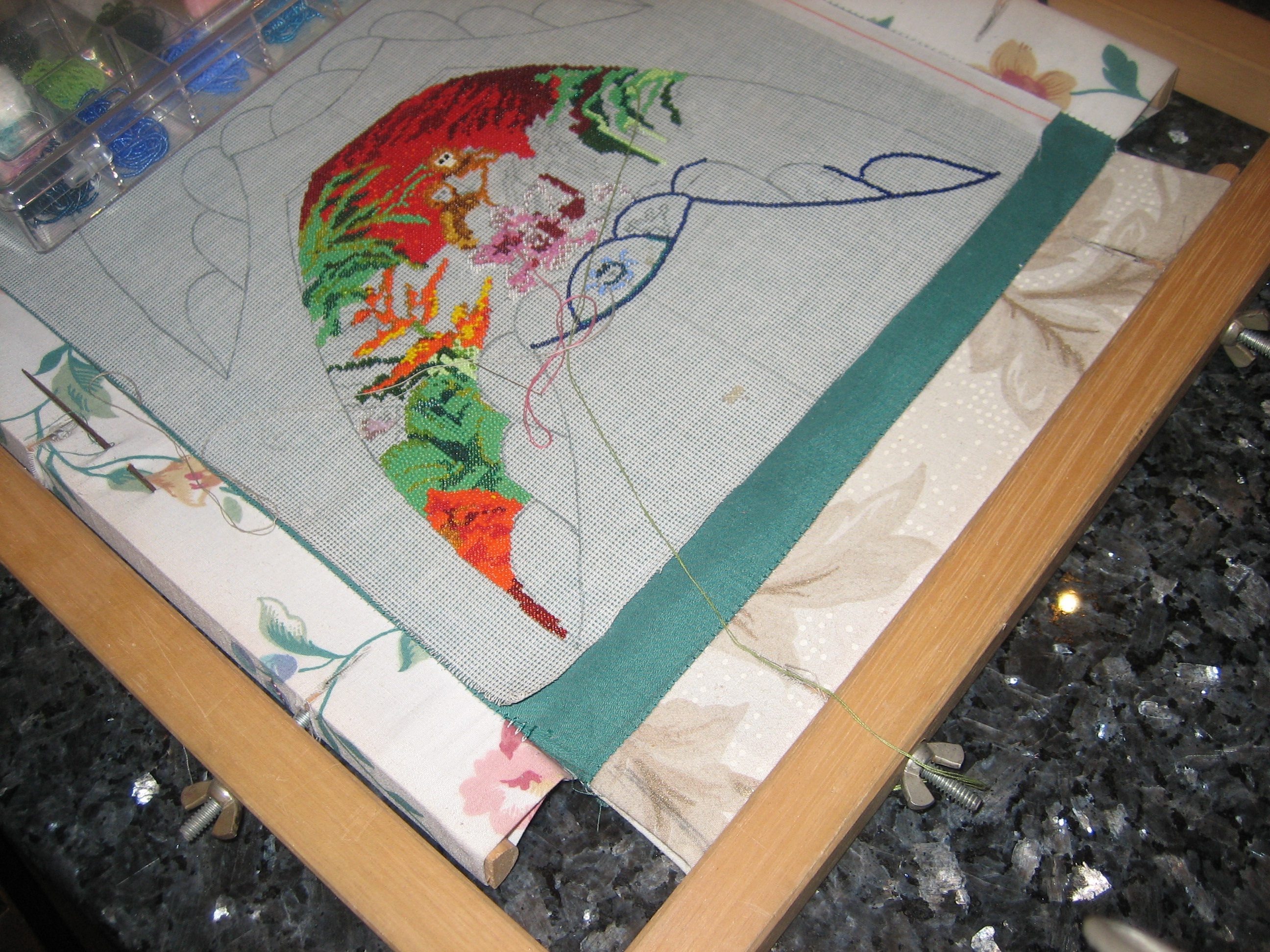
This is a one-of-a-kind design, it’s going to be some monkeys in the jungle. The woman who owns the shop and was doing the beading will sell the shoes for about 900, which means there is no way for her to make a living doing that kind of thing given the hours she puts into it. Instead, she does it to retain the knowledge and for the therapeutic effect of the beading. Here she is doing some work.
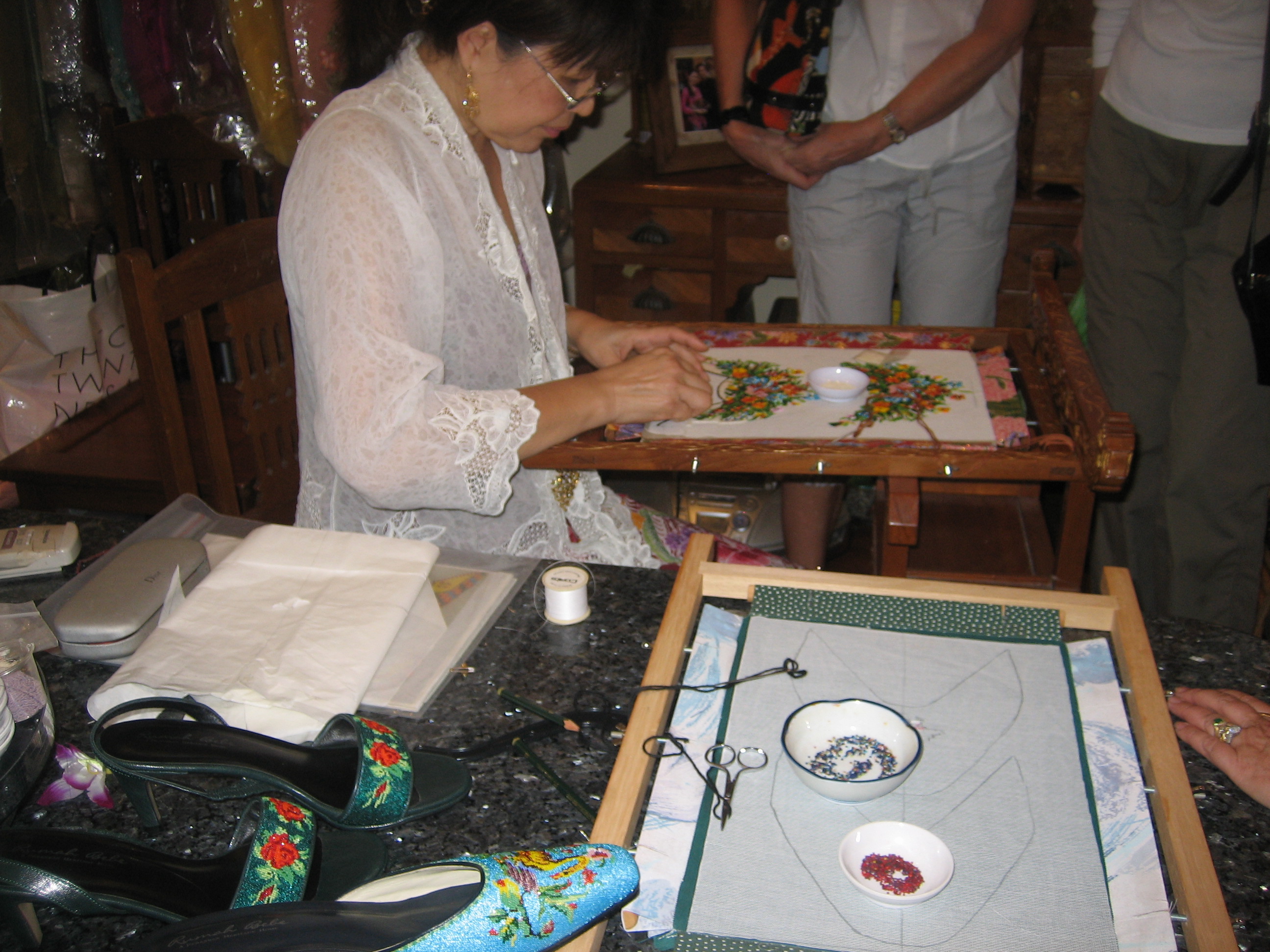
I know I would go crazy sitting around beading like that, not to mention my eyes would probably pop out of my head after looking at that kind of detail all day, but she truly seemed to enjoy her work.
It’s kind of funny, I still haven’t been to Chinatown or Little India yet, but I’ve already learned so much about this tiny little group of people still living in Singapore. There is still a LOT to learn and try and see and do, but we’ll get there. In the meantime, I really enjoyed my Peranakan adventure today.
Topics: east coast, food, neighborhoods, sightseeing | 2 Comments »
2 Responses to “Peranakan Adventure”
Comments
You must be logged in to post a comment.
July 19th, 2008 at 2:03 am
I love this blog!!! Thank you for sharing all the wonderful aspects of your trip with us still back in the US. Keep them coming little lady!
July 19th, 2008 at 11:56 pm
Very intriguing, indeed….